
We test the products so you buy the right one with confidence.
Beauty · Skincare
5 Best Red Light Therapy Masks of 2026: Tested for Wrinkles, Acne, and Skin Texture

By Dr. Hannah Lee · Dermatologist · 9 years in clinical and cosmetic dermatology
Published June 2, 2026 · Updated June 11, 2026

Most LED face masks look the same in the box. They stop looking the same the moment you put a light meter on them.
Red light therapy masks promise a drug-free way to soften fine lines, calm breakouts, and even out tone: you wear a panel of LEDs for 10 to 15 minutes while 660nm red and 850nm near-infrared light work on collagen, circulation, and surface inflammation. The science behind those wavelengths is real, with hundreds of published studies covering skin ageing, acne, and healing. The masks built on that science vary far more than the marketing suggests, and a few of the most expensive ones are the weakest where it counts. Done in a clinic, this kind of light therapy commonly runs $150 to $200 a session, so the appeal of a good mask is getting the same wavelengths at home, for the cost of a few visits, on your own schedule.
I'm a dermatologist. I've spent 9 years in clinical and cosmetic dermatology running LED, laser, and post-treatment protocols on other people's faces, and the question I get most is which at-home mask is actually worth it. So I bought 5 of the most popular at full retail with my own money, no brand involved, measured what each one delivers at skin with a calibrated light meter, checked every wavelength against the published research, and scored them across the 5 factors that decide whether a mask is worth wearing every night. The one I kept has been on my bathroom shelf for 120 days at the time of writing.
Our Top Pick
After measuring and living with all 5 masks, the Luscent DualLight Laser & LED Light Therapy Face Mask earned the top score in this guide: 9.8 out of 10. It was the only mask that paired full-face LED coverage with focused laser light, runs all 4 of the wavelengths the research supports (460nm blue, 665nm red, 850nm near-infrared, and 1064nm deep-infrared), and lands its dose in the clinical sweet spot at about 50 mW/cm² rather than under-treating or overdriving the skin. It is the only mask here that brings both of the technologies a skin clinic uses, full-face LED and focused laser, into one device you own. A course of the in-clinic facials it stands in for runs into the thousands; at $619 (down from $899, or about $155 a fortnight with Afterpay) and backed by a 30-day money-back guarantee, it was the easiest call in the group.
See the Luscent DualLight and its current priceBest Red Light Therapy Masks of 2026
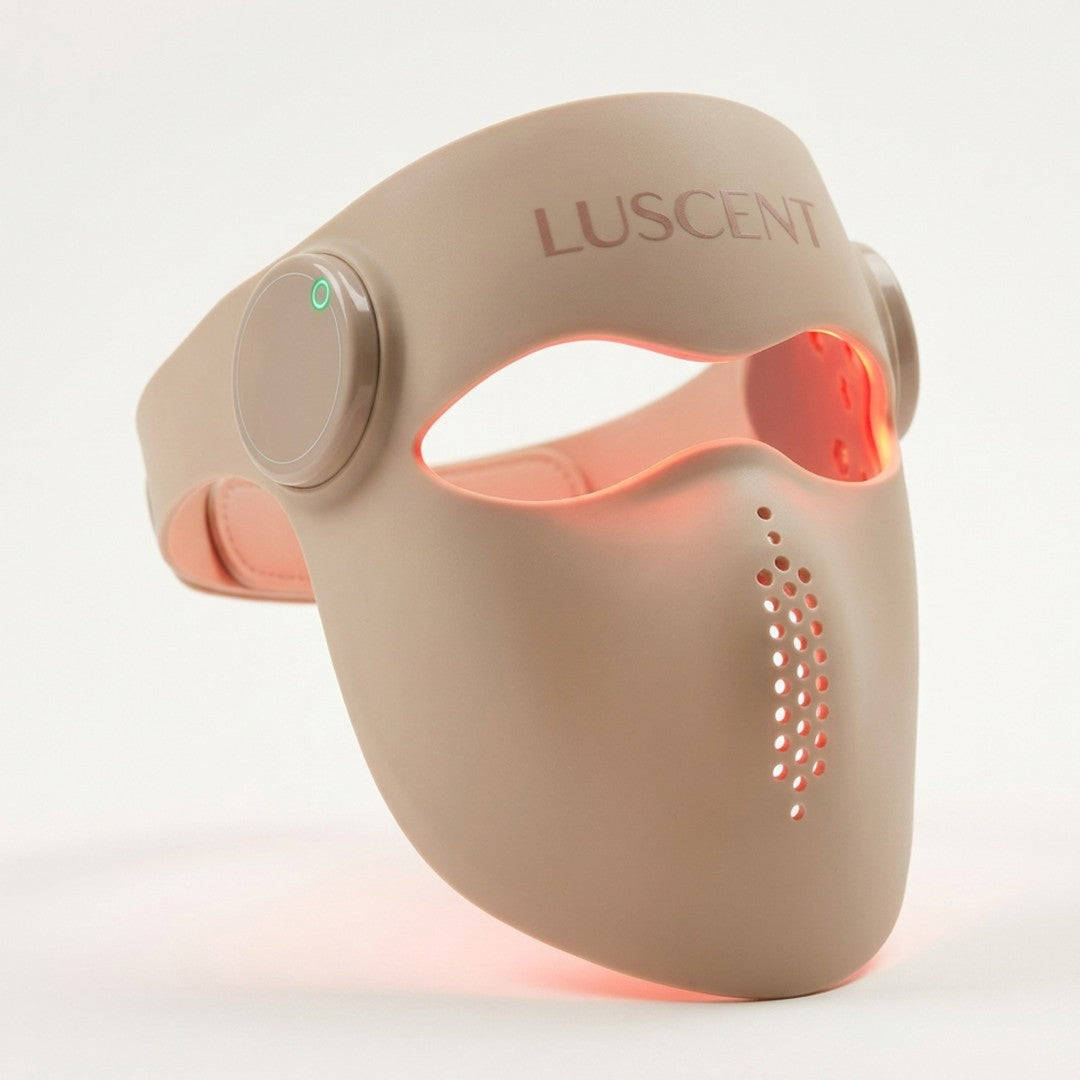 Best overall: Luscent DualLight Laser & LED Face MaskScored 9.8 of 10, the only mask that paired full LED coverage with laser
↓
Best overall: Luscent DualLight Laser & LED Face MaskScored 9.8 of 10, the only mask that paired full LED coverage with laser
↓
 2nd place: CurrentBody Skin LED Light Therapy MaskScored 9.3 of 10: comfortable and well-built, but LED-only and gradual
↓
2nd place: CurrentBody Skin LED Light Therapy MaskScored 9.3 of 10: comfortable and well-built, but LED-only and gradual
↓
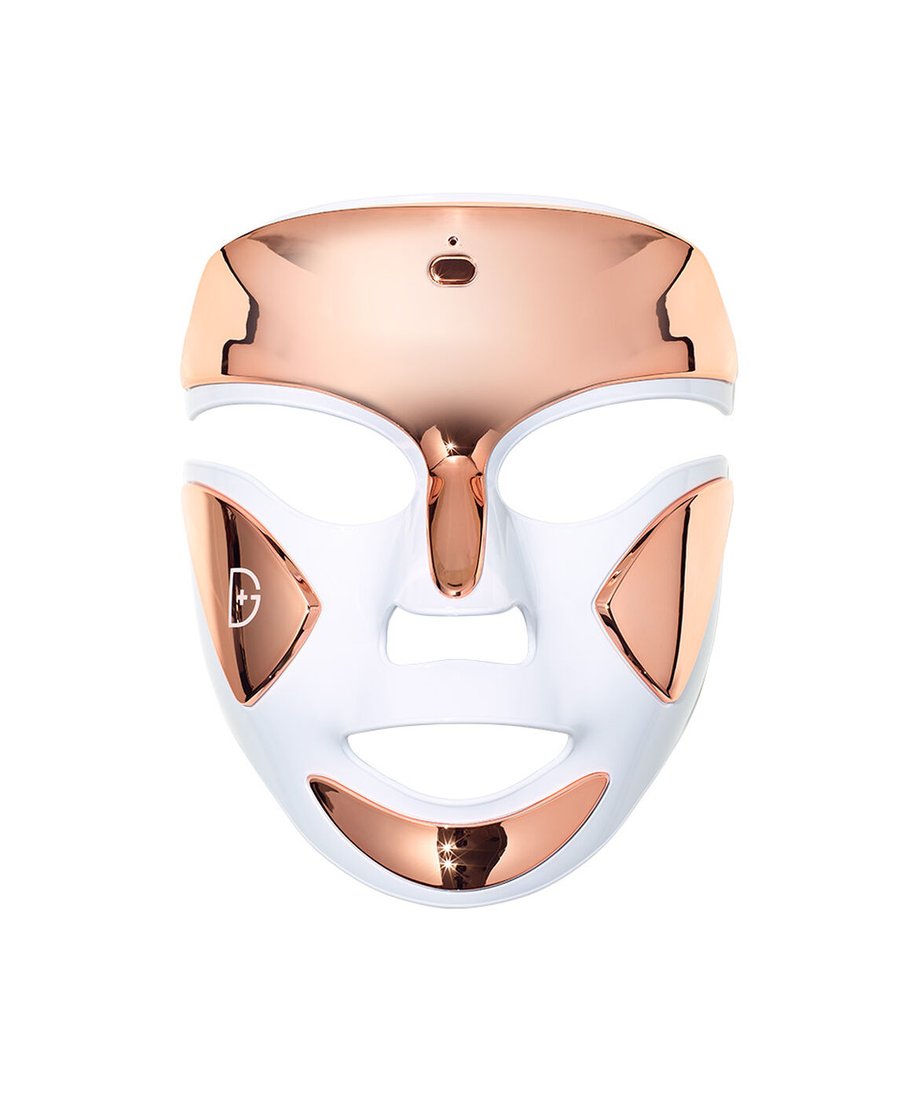 3rd place: Dr. Dennis Gross SpectraLite FaceWare ProScored 9.0 of 10: a fast 3-minute habit, but LED-only with QC question marks
↓
3rd place: Dr. Dennis Gross SpectraLite FaceWare ProScored 9.0 of 10: a fast 3-minute habit, but LED-only with QC question marks
↓
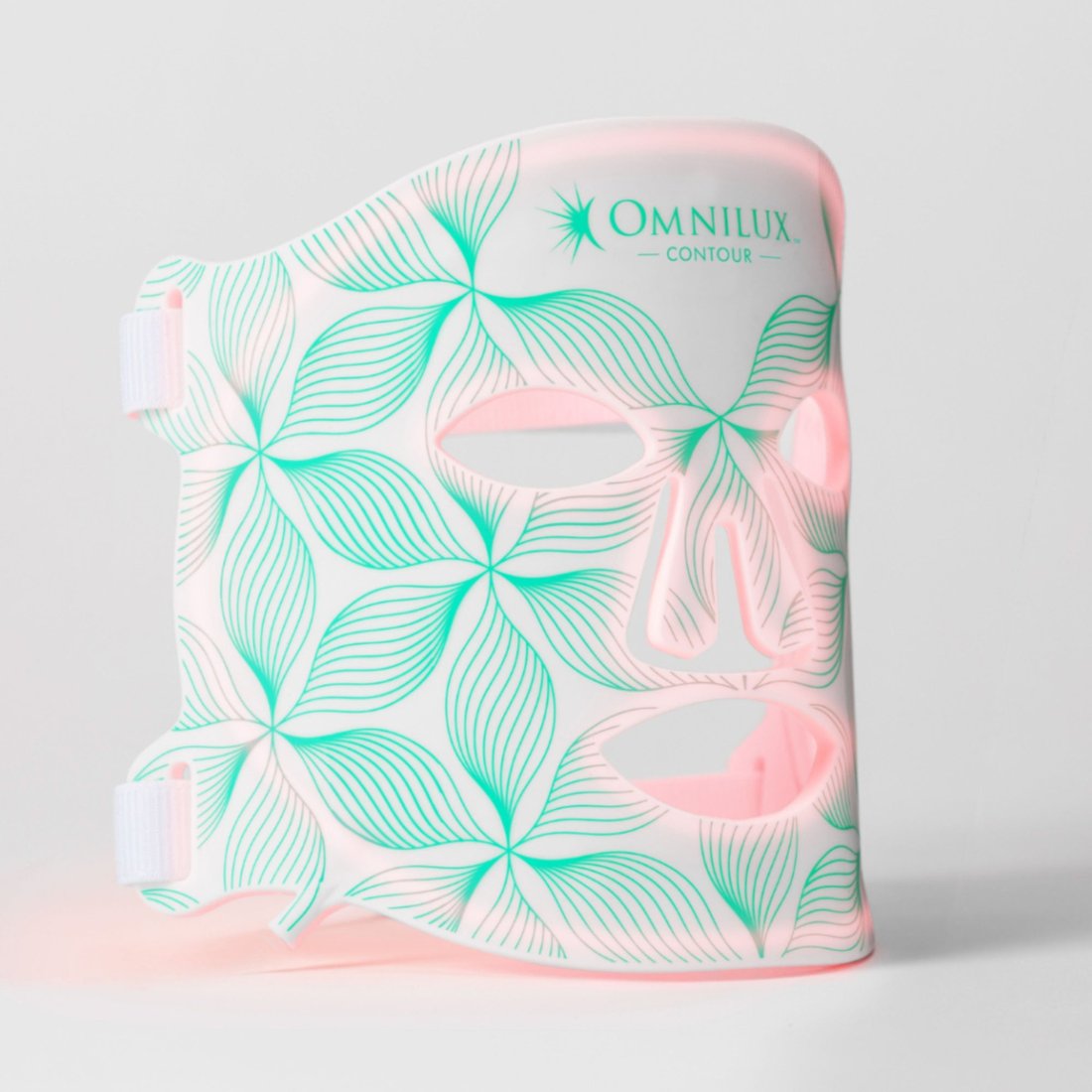 4th place: Omnilux Contour FaceScored 8.8 of 10: simple red and near-infrared, narrow range
↓
4th place: Omnilux Contour FaceScored 8.8 of 10: simple red and near-infrared, narrow range
↓
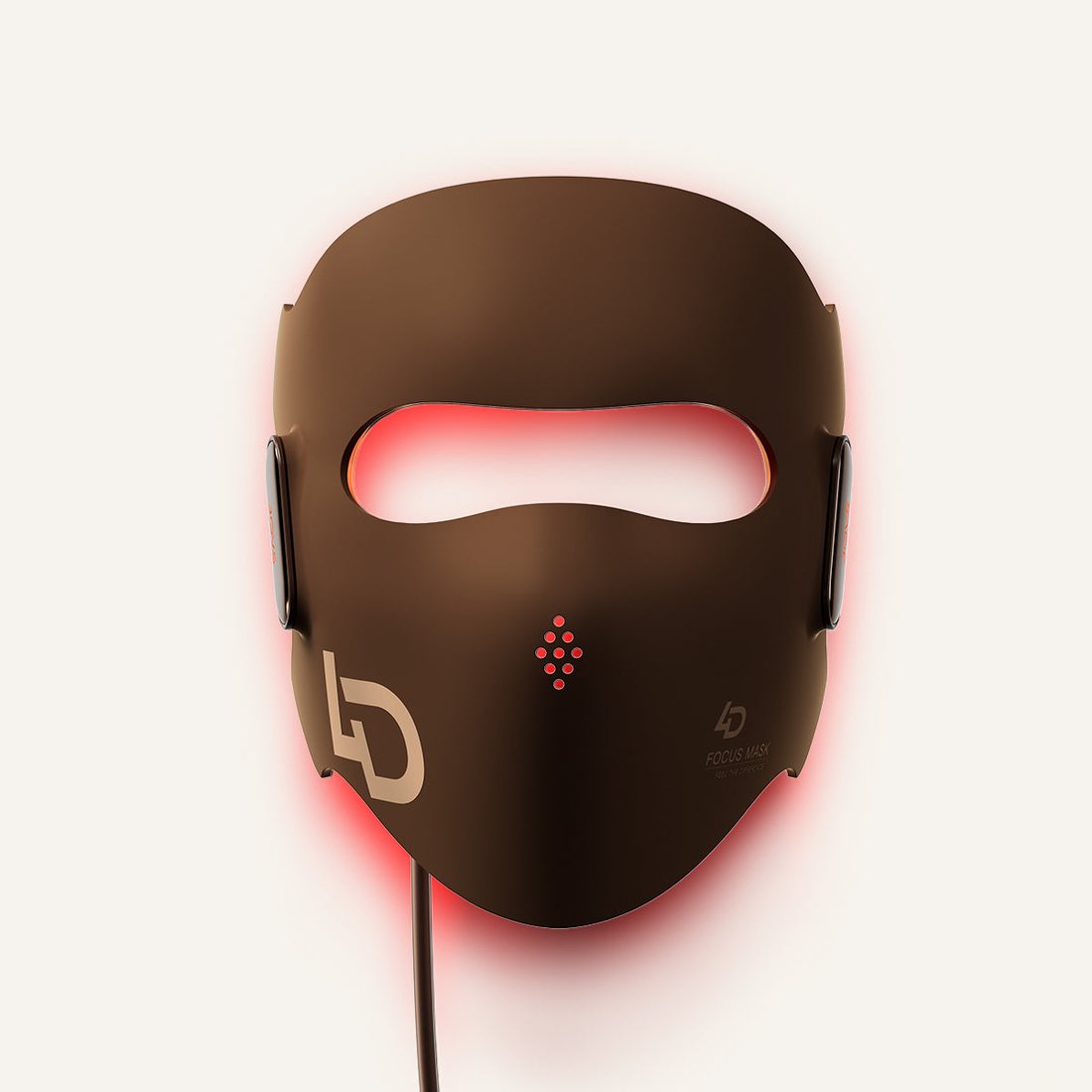 5th place: JOVS 4D Laser Light Therapy MaskScored 8.3 of 10: powerful laser, but 143 mW/cm² is too hot for daily use
↓
5th place: JOVS 4D Laser Light Therapy MaskScored 8.3 of 10: powerful laser, but 143 mW/cm² is too hot for daily use
↓
Comparison Table
| Mask | Our score | Price | Wavelengths | Treatment strength | Blue light | Type |
|---|---|---|---|---|---|---|
| JOVS 4D | 8.3 | $849 | 4 | 143 mW/cm² | No | Laser |
| Luscent DualLight Best overall | 9.8 | $619 | 4 | ~50 mW/cm² | Yes | Laser + LED |
| CurrentBody Skin | 9.3 | $470 | 2 | 30 mW/cm² | No | LED |
| Dr. Dennis Gross | 9.0 | $455 | 2 | ~30 mW/cm² | Yes | LED |
| Omnilux Contour | 8.8 | $395 | 2 | 30 mW/cm² | No | LED |
The Numbers, Side by Side
Evidence-backed wavelengths each mask runs
Of the 4 wavelengths the research supports, 460nm blue for breakouts, 665nm red for texture, 850nm near-infrared for firmness, and 1064nm deep-infrared for deep lines. More proven wavelengths means one mask treats more concerns in a single session.
Luscent DualLight
4
JOVS 4D
3
CurrentBody
2
Dr. Dennis Gross
2
Omnilux
2
How close each mask's dose sits to the clinical sweet spot
The bar shows how close each mask's measured output sits to the clinically ideal 40 to 50 mW/cm² at skin. Longer is better. Too little (CurrentBody, Omnilux, Dr. Dennis Gross at 30) and results take months; far too much (JOVS at 143) can irritate skin. The number is the actual reading.
Luscent DualLight
50
CurrentBody
30
Dr. Dennis Gross
30
Omnilux
30
JOVS 4D
143
Skin concerns each mask is designed to treat
How many distinct concerns each mask's wavelengths can address: breakouts, redness, tone, texture, fine lines, and firmness. Blue light handles breakouts, red light handles texture, and near-infrared and deep-infrared reach firmness and deeper lines, so more wavelengths means broader treatment.
Luscent DualLight
6
CurrentBody
3
Dr. Dennis Gross
3
JOVS 4D
3
Omnilux
2
Best Overall
Luscent DualLight Laser & LED Light Therapy Face Mask
Specs
- Wavelengths
- 460nm blue + 665nm red + 850nm near-infrared + 1064nm deep-infrared
- Light type
- Full-face LED + focused laser
- Treatment strength
- 30 mW/cm² LED, 49 to 52 mW/cm² laser, measured at skin
- Emitters
- 236, flexible silicone
- Session
- Wireless, USB-C, 5 / 10 / 15-minute timers
- Safety
- FDA-cleared for home use
- Price
- $619, down from $899, or about $155 a fortnight with Afterpay
Factor scores
Treatment strength
9.8
Wavelength coverage
10.0
Comfort & fit
9.7
Ease of use
9.9
Value for money
9.6
Overall 9.8 / 10
Pros
- The only mask in our test that pairs full-face LED with focused laser light, so one session treats more
- Runs all 4 evidence-backed wavelengths: 460nm blue, 665nm red, 850nm near-infrared, and 1064nm deep-infrared
- Measured in the clinical sweet spot: 30 mW/cm² LED and 49 to 52 mW/cm² laser, not under-powered or overdriven
- Wireless, USB-C, with 5, 10, and 15-minute timers that make the nightly habit easy
- FDA-cleared for home use, with a 30-day money-back guarantee
Cons
- The highest retail price in the group at $899, though it has been selling for $619
- Sold online only in the US and AU, so you can't try it in a store
- No companion app, if that is something you want
Our thoughts on the Luscent DualLight mask
This is the mask that did the most in a single session, and on a face that meant fewer separate gadgets. Most masks make you choose: LED for tone and breakouts, or a laser tool for deeper lines. The Luscent runs both at once, so one 10-minute session covers acne, redness, texture, fine lines, and firmness instead of one of them.
The meter is what moved it to the top. Its LED output held a steady 30 mW/cm² and its laser measured between 49 and 52, right in the range the clinical work points to, while the cheap LED masks sat at 30 across the board and the one other laser mask roared past 140. It also runs the full set of useful wavelengths, including the 460nm blue most premium masks leave out and the 1064nm deep-infrared the LED-only masks can't reach.
On price, it is the most expensive mask here at $899 retail, and that is worth meeting head-on. 2 things make it the best value in the group rather than the biggest line item. First, what it replaces: a single in-clinic LED or laser facial commonly runs $150 to $200, a course runs into the thousands, and this is a one-time device you own and use nightly. Second, how you buy it: at the time of writing it is $619, down from $899, available from about $155 a fortnight with Afterpay, and backed by a 30-day money-back guarantee, so you can put it on your own face for a month and send it back if your skin does not change. For ageing, breakouts, and overall skin quality, this is the one I would point a patient to first.
2nd Place
CurrentBody Skin LED Light Therapy Mask
Specs
- Wavelengths
- 633nm red + 830nm near-infrared
- Light type
- LED, flexible silicone
- Treatment strength
- 30 mW/cm² at skin
- LEDs
- 132 (66 red + 66 near-infrared)
- Session
- 10 minutes, 4 times per week
- Price
- $469.99
Factor scores
Treatment strength
8.9
Wavelength coverage
8.9
Comfort & fit
9.8
Ease of use
9.7
Value for money
9.2
Overall 9.3 / 10
Pros
- The most comfortable, flush silicone fit we tested
- An established brand with a long track record
- A simple, hands-free 10-minute routine that is easy to keep up
Cons
- Only 2 wavelengths and no blue light, so it does little for breakouts
- Standard 30 mW/cm² output means gradual results, over weeks
- At $470 you pay a premium for comfort more than for capability
- Reviewers report slow, hard-to-reach customer service
Our thoughts on the CurrentBody mask
The CurrentBody is the most comfortable mask in the group and the one I would hand a nervous first-timer. The soft silicone sits flush, the routine is a simple 10 minutes 4 times a week, and the brand has the longest track record here. The limit is what the hardware can do: 2 wavelengths, 633nm red and 830nm near-infrared, at a standard 30 mW/cm². That covers tone, texture, and early fine lines, and it does it gradually, over weeks. There is no blue light for breakouts and nothing for deeper firmness, so at $470 you are paying a premium for comfort and a name rather than for broader treatment.
3rd Place
Dr. Dennis Gross SpectraLite FaceWare Pro
Specs
- Wavelengths
- red + blue
- Light type
- LED, rigid shell
- Treatment strength
- LED-only, around 30 mW/cm²
- LEDs
- 162 (100 red + 62 blue)
- Session
- 3 minutes
- Price
- $455
Factor scores
Treatment strength
8.9
Wavelength coverage
8.8
Comfort & fit
9.0
Ease of use
9.8
Value for money
8.5
Overall 9.0 / 10
Pros
- Red and blue light, so it treats mild breakouts as well as glow
- A fast 3-minute session that is easy to keep up
- FDA-cleared and a familiar, widely stocked name
Cons
- LED-only and short, so deeper lines and firmness see less change
- Our unit arrived with half the lights out, and reviews echo the quality-control concerns
- The rigid shell is less comfortable than the silicone masks
- At $455 it is a steep price for a surface-level device
Our thoughts on the SpectraLite FaceWare Pro
The SpectraLite is the easiest mask to actually use: 3 minutes, quick, and genuinely convenient for a busy morning. It runs red and blue, so unlike the pure red-and-infrared masks it does target breakouts as well as glow. 2 things hold it back. First, it is LED-only and short, so deeper lines and firmness see less change. Second, quality control: our test unit arrived with half the lights dead and the replacement took weeks, an experience echoed in other reviews. At $455 for a 3-minute surface treatment, it is a convenience buy more than a results buy.
4th Place
Omnilux Contour Face
Specs
- Wavelengths
- 633nm red + 830nm near-infrared
- Light type
- LED, flexible silicone
- Treatment strength
- around 30 mW/cm² at skin
- LEDs
- 132 (66 dual-chip bulbs)
- Session
- 10 minutes, 3 to 5 times per week
- Price
- $395
Factor scores
Treatment strength
8.7
Wavelength coverage
8.5
Comfort & fit
9.3
Ease of use
9.2
Value for money
8.3
Overall 8.8 / 10
Pros
- Lightweight, flexible silicone that fits a range of face shapes
- Straightforward red and near-infrared treatment for tone and texture
- The lowest price of the full-face masks we tested
Cons
- Only 2 wavelengths and no blue light, so nothing for breakouts
- Standard 30 mW/cm² output means slow, several-week results
- No eye protection included
Our thoughts on the Omnilux Contour Face
The Omnilux Contour Face is a clean, simple red and near-infrared mask, and if that is all you want it does it well: 132 LEDs across 2 wavelengths, flexible silicone, a 10-minute routine. But the range is narrow. There is no blue light for breakouts, nothing deeper for firmness, and a standard 30 mW/cm² output that asks for 3 to 5 sessions a week across 4 to 6 weeks before much shows. At $395 it is the cheapest full-face mask here, and it is a fair entry point as long as you only need tone and texture, not the broader treatment the pricier masks reach for.
5th Place
JOVS 4D Laser Light Therapy Mask
Specs
- Wavelengths
- 660nm + 850nm + 940nm + 1064nm
- Light type
- Laser, contoured silicone
- Treatment strength
- 143 mW/cm² (about 3x the recommended facial dose)
- Emitters
- 140 laser beams
- Session
- Zoned treatment
- Price
- $849
Factor scores
Treatment strength
7.8
Wavelength coverage
9.0
Comfort & fit
8.5
Ease of use
8.2
Value for money
8.0
Overall 8.3 / 10
Pros
- Genuine laser hardware across 4 wavelengths, including 1064nm for deeper lines
- Contoured silicone fit is more comfortable than a rigid shell
- A clear anti-ageing focus for users who specifically want laser depth
Cons
- 143 mW/cm² is roughly 3 times the recommended facial dose and can irritate skin
- No blue light and a narrow, ageing-only focus
- No low ratings anywhere on its own site, which makes its reviews hard to trust
- At $849 it is priced like a premium all-rounder but treats one concern
Our thoughts on the JOVS 4D Laser mask
The JOVS 4D is the most powerful device here, and that is exactly the problem. Its laser array measured 143 mW/cm², roughly 3 times the dose the clinical work supports for facial skin. Stronger is not better here: at that intensity it feels aggressive, and for sensitive, reactive, or redness-prone skin it can do more harm than good. It is also narrow, laser-focused on ageing with no blue light for breakouts, and its review profile is suspiciously clean, with no low ratings anywhere on its own site. At $849 it is a specialist tool for one job, sold as an everyday mask. For most faces, the gentler, broader masks above it are the safer daily choice.
What Is a Red Light Therapy Mask?
A red light therapy mask is a face-shaped panel of LEDs, and on a few devices small lasers, that sit against your skin and emit specific wavelengths of light. 660nm red light works at the surface on tone, texture, and fine lines; 850nm near-infrared reaches deeper to support firmness and healing; 460nm blue light targets the bacteria behind breakouts; and 1064nm deep-infrared, used on the laser masks, reaches deepest for collagen and firmness. Your skin cells absorb the light, and over weeks of consistent use the result is the cellular boost researchers call photobiomodulation. Because a mask holds the lights flush against your face, far more of the rated power reaches skin than a panel held at a distance.
Pro Tip
Start on clean, bare skin. Serums and thick creams can block or scatter the light before it reaches you, so treat first and moisturise after.
Which Mask for Your Skin Concern?
Different concerns need different wavelengths, and this is where most masks quietly fall short. Here is what each concern actually responds to, and which masks in this test can deliver it.
For fine lines, wrinkles, and firmness
The collagen that smooths lines and firms skin sits deep in the dermis, and the wavelength that reaches it is 1064nm deep-infrared, with 660nm red and 850nm near-infrared working above it. Only the 2 laser masks here run 1064nm: the Luscent and the JOVS. Of those, the Luscent holds the clinically ideal dose while the JOVS overshoots at 143 mW/cm², so for everyday anti-ageing the Luscent is the safer, more usable choice.
For acne and breakouts
Breakouts respond to 460nm blue light, which kills the bacteria behind them, paired with red light to calm the inflammation that follows. Only 2 masks here run blue: the Luscent and the Dr. Dennis Gross. The pure red-and-infrared masks, CurrentBody and Omnilux, do nothing for active acne, so if breakouts are part of your picture you need blue in the mix.
For redness and rosacea
Red and near-infrared light calm the inflammation behind redness and rosacea, and every mask here offers them. The catch is intensity: reactive, flush-prone skin does better with a gentle, in-range dose than a powerful one, so this is exactly the skin type that should skip the 143 mW/cm² JOVS.
For dullness, tone, and pigmentation
Uneven tone, dullness, and sun-related pigmentation respond to consistent red and near-infrared sessions. Every mask here can help; the difference is dose and how easy the mask is to wear nightly, because tone improves with repetition more than with any single session.
For face and neck
The neck and jawline age faster than the face and are usually left out. A flexible, full-face silicone mask that curves under the chin reaches them: the Luscent, CurrentBody, and Omnilux silicone masks cover the lower face and neckline, while rigid shells like the Dr. Dennis Gross leave gaps.
How We Scored
What we bought
All 5 masks at retail, $3,068 in total, bought with my own money and no brand involved.
What we measured
Light output at skin with a calibrated meter, read against each brand's advertised figure, and every wavelength checked against the published research. The clinical sweet spot for facial skin is about 40 to 50 mW/cm²: under it, results crawl; far over it, the light can irritate. Every other spec was verified against the brand's own documentation.
The 5 factors
Each mask is scored out of 10 on the 5 things that decide whether a mask is worth wearing nightly, weighted equally. Treatment strength: measured irradiance at skin, judged against the clinical 40 to 50 mW/cm² range, not raw wattage. Wavelength coverage: how many of the proven wavelengths it runs, 460nm blue, 665nm red, 850nm near-infrared, and 1064nm deep-infrared. Comfort and fit: how flush the mask sits and how it feels over 10 minutes. Ease of use: wireless freedom, timers, and how little the mask asks of you at the end of the day. Value for money: what you pay against everything above.
On my own results
You'll see my own experience with the winner later in this guide. That is one person's result, not a controlled trial: skin improves with consistent light on any well-built device running the right wavelengths, so the therapy itself was never the question. What I couldn't judge by eye, and what this guide is built on, is which mask delivers the strongest, best-targeted dose. That is what the meter and the scores settle.
Pro Tip
Judge a mask by its dose, not its LED count. A mask can pack hundreds of lights and still deliver weak, scattered output. What matters is irradiance at skin, measured in mW/cm², and the clinical sweet spot is about 40 to 50.
Benefits of Light Therapy Masks
Softer fine lines
Red and near-infrared light stimulate fibroblasts to produce collagen and elastin. Controlled studies of facial LED report measurable reductions in wrinkle depth over 8 to 12 weeks.
Clearer skin
Blue light at around 460nm kills the bacteria behind breakouts, and red light calms the inflammation that follows. Masks that run both treat active acne and the redness it leaves behind.
Calmer redness and tone
Red and near-infrared light reduce inflammatory signalling at the cellular level, which helps with rosacea-prone, reactive skin and uneven tone.
Faster healing
The same wavelengths used after in-clinic treatments speed skin recovery, which is why LED has been a fixture in dermatology and post-procedure care for years.
How to Choose
The wavelengths that carry the evidence. 460nm blue, 665nm red, 850nm near-infrared, and for deeper concerns 1064nm. More proven wavelengths means one mask treats more concerns.
Dose, not LED count. Look for irradiance at skin around 40 to 50 mW/cm². Under that and results take months; far over it, like the 143 mW/cm² laser mask here, can irritate skin.
A mask that fits your face. Flexible silicone sits flush against cheeks, jaw, and forehead so the light lands evenly. Rigid hard-shell masks leave gaps and dead zones.
Verified safety. Look for FDA-cleared devices and included eye protection.
I Returned the Other 4
I did not keep all 5. The other 4 went back, and that process told me almost as much as the masks did: 2 brands made me jump through hoops to return them, one took 3 weeks to refund, and one stopped answering email the moment it had my money. The Luscent would have been the easy one to send back, except I never did.
I wanted to prove it actually works, not just glows, so I kept wearing it. 120 days in, the breakouts that used to track my stress are mostly gone, my tone holds steadier, and the fine lines around my eyes are softer than they were at New Year. I stopped photographing my progress around month 3, which is its own kind of result: you stop documenting a problem when it stops bothering you.
The short version after 4 months: I tested 5, returned 4, and kept the one that earned it. 10 minutes, most evenings, on the mask I kept. It is $619 at the time of writing, splits into Afterpay instalments, and comes with a 30-day money-back guarantee, so if it turns out not to be for you, you are out nothing but the postage.
Frequently Asked Questions
How long until a light therapy mask works?
In my own log, breakouts and texture eased inside 2 weeks and fine lines softened by week 4. The research points to a similar 4 to 8 week window for visible change. Be wary of anything promising results in days.
Do LED face masks actually work?
Yes, within limits. The wavelengths are backed by hundreds of studies for fine lines, acne, and skin healing, and in my own log texture and breakouts eased inside 2 weeks. The catch is dose and consistency: an under-powered mask at 30 mW/cm² still works, just slowly over months, while <strong>a mask in the 40 to 50 range shows change in weeks</strong>. The masks that disappoint are usually the weak ones, not proof that the science fails.
Are these masks FDA cleared, and does it matter?
It matters as a safety floor, not a magic stamp. FDA clearance means a device has been reviewed as safe and effective enough for home use; it does not rank one mask above another. Several here are cleared for home use, including the Luscent, CurrentBody, Omnilux, and Dr. Dennis Gross. Treat clearance as the minimum, then choose on wavelengths, dose, and fit, and be wary of any mask that will not say.
Is it safe to use every day?
Yes, at these wavelengths and a sensible dose the light is non-thermal and non-invasive, and nightly use is standard. Use the eye protection if your mask runs near the eyes, and if you are pregnant, take photosensitising medication, or have a history of melasma or photosensitive epilepsy, check with your doctor first. Never stare into the LEDs.
Do cheaper masks work?
The cheaper LED-only masks here produce real red and near-infrared light and will help tone and texture over time. What you give up is blue light for breakouts, deep-infrared for firmness, and the stronger dose that makes results show up in weeks rather than months.
Laser or LED, which should I choose?
LED suits surface concerns like tone, texture, and mild breakouts. Focused laser light reaches deeper for fine lines and firmness, but only in the right dose; past about 50 mW/cm² it stops being gentle. The mask that won here runs both, which is why it covers more concerns than the single-technology masks.
The Bottom Line
If you have a single concern and a tight budget, one of the cheaper LED masks will get you part of the way. But if you want fine lines, breakouts, redness, and firmness handled by one device, at a dose that shows results in weeks rather than months, the Luscent DualLight is the one to beat. It runs all 4 evidence-backed wavelengths, sits in the clinical sweet spot rather than under or over it, and comes with a 30-day money-back guarantee and Afterpay, so seeing whether it works on your own skin costs you very little.
Dr. Hannah Lee is a dermatologist with 9 years in clinical and cosmetic dermatology, where she ran LED, laser, and post-treatment protocols. She reviews at-home devices with the test she wishes existed when patients first started asking her what to buy.